Operations

5 signs you need to spend more time working on your business

5 signs you need to spend more time working on your business

These 5 signs you need to spend more time working on your business can make the difference between long term success, or failure. Entrepreneurs juggle a lot of responsibilities, so it’s tough to stay balanced. It can be a challenge to make the time to review results, see the bigger picture, and check in with yourself. But it’s so important, and this post explains why. 

1. Books are not updated

Bookkeeping may be your idea of a good time, but it is a critical part of running a business. Because without updated financial reports, how will you know key metrics like profitability, and revenue growth? 

Futhermore, if books are not updated, it makes it hard to know what tax remittances to make, what bills need to be paid, and what invoices haven’t been collected. This creates stress, losses, cash flow problems, or even business failure. Given that government tax agencies have extensive power and can even close a business, clearly bookkeeping should not be neglected. Make bookkeeping easier with technology. When I ran my franchise system in Canada, I used QuickBooks. In the UK, I use and recommend FreeAgent. All bank transactions are updated so there is no manual entry. It makes reporting and tax filings so easy, with very little administration time. 

Ask yourself:

Are bank statements reconciled?

What is the status of tax filings for the business ? Remitting sales tax, payroll tax, and tax on profits? 

Did I file my own personal taxes last year?

Are my business finances separate from my personal finances?

2. Website is out of date

Clearly, most companies have websites. While for some it may be more information, for others it is transactional. For businesses that rely on a website for orders, sales, or bookings is more likely to be updated and maintained on a regular basis. However, for other businesses, a website is essentially an online billboard. It’s just a way to present information, and not directly tied to revenue. Therefore, it’s less of a priority to when spending time working on your business.

However, even if your company website isn’t how you make your money, keep it updated. One, it’s a powerful way to connect with your audience. This is how they may find your location or your contact details. Two, it’s an important step of the decision making process. If I see great content on social media, I click through to the website to learn more about the product or service. If the site is outdated, or inaccurate, or has a 404, this doesn’t build trust, and this can negatively impact my decision to purchase. Sometimes, starting a new site from scratch is faster, easier, and less money than cleaning up the code, content, and plugins of an old site that hasn’t been updated for awhile. The IONOS website creator makes it easy.

Losing a website - a true story

Here is an example. Years ago I knew a small business owner who got so busy servicing customers that he didn’t spend any time working on his business. Administration, marketing, website maintenance – it was all ignored. He didn’t do it, and he didn’t outsource it to someone else to handle. And then, he hit a slump. Projects were completed, so he needed more customers. But there were no calls or emails coming in. That is how he realized that his website was down. Not only that, but his domain name had expired, and a competitor had purchased it. So when people searched for his company name, they were directed to a website owned by a direct competitor. 


Ask yourself:

Is the copyright year on the website accurate?

Does my website have current prices and services?

Are names, addresses, contact details accurate?

When were internal and outbound links last checked?

What is the site speed?

How is the site ranked for SEO and SERP?

3 - No marketing campaign

Are you super busy with your current workload? Great! But things change fast. In order to avoid a revenue drop, keep the marketing activity flowing. Also, keep track of results, so that you know what marketing channel and message is most effective. It’s best to review marketing results from past quarters and years to see not just how many people responded to your ads and outreach, but how many became customers. Because who knows what this analysis will reveal? You may find that what worked well before is not yielding the same results. 

Ask yourself:

Do I know my customer avatar?

Am I reaching my customers in all the right places, and with the right frequency?

What is the cost acquisition for new customers?

Which marketing channel gives the best return on investment?

How does the conversion rate compare to last quarter, or last year?

4 - Unanswered emails and messages

In a perfect world, all channels of communication would be clear and empty by the end of every business day. However, that isn’t realistic for most entrepreneurs. But if your unanswered emails and messages are piling up each day, and spilling over into new weeks and months, this is a sign to spend more time working on your business. 

After all, many entrepreneurs juggle it all – sales, support, and marketing. But more established business owners have usually delegated these tasks. So here may be front line staff to respond to customers, and a social media manager to deal with DMs. Amazing. However, having a team means questions for the boss, and a bigger business means more communication. Therefore, what is going on with your email and messages is an opportunity to set up processes and systems to keep up with communication and administration.

In our digital online world, we don’t often pick up the phone and make a call. But when we do, we expect a response. Don’t send your customers (or potential customers!) into the void of voicemail. Answering services are professional, prompt, and can use the language and messaging you want your customers to hear. I recommend Ruby to my clients in the United States, and in the UK I love the services of MoneyPenny.

Ask yourself:

How long do customers wait for a response?

Am I responding to emails at night, or on weekends, when I could be more present with family, friends, and fun?

Do I use technology to make communication faster? Auto responders, automations, pre-written responses?

Have I ever missed something important because it was buried in email, WhatsApp, or DMs?

5 - No strategy

The last of these 5 signs you need to spend more time working on your business is not having a strategy. Basically, this means winging it week to week, quarter by quarter, without a specific strategic plan. By all means, this doesn’t have to be polished, pretty, or posted on a wall. It can be a sketch in a journal or bullet points on your phone. The point is, do you have a roadmap to follow to direct your business activities?

After all, it’s easy to get into the groove of managing things day by day.  The administrative tasks of regular operations like fulfilling orders, managing staff, or dealing with suppliers is a busy schedule. And it can be exciting, and feel satisfying. This is ok for a little while. But as weeks and months slip by without spending time on strategy and leave your business lost and without direction. 

Ask yourself:

Is revenue and profits reviewed regularly to compare from quarter to quarter, and year to year? 

Do we track performance metrics that are meaningful for our business and customers? Things like quality, response time, delivery time, satisfaction levels, referrals, retention?

What are specific goals for the coming year?

Why these 5 signs matter to your business

Clearly, bookkeeping, website, marketing, communication, and planning are all important elements of working on a business. If these are all up to date, it’s a sign of a well managed business. However, when these activities are set aside to mostly deal with day to day stuff, it can quickly pile up into a mess that creates problems. As shown above, not spending time on a business can lead to big problems, like losing a domain name! 

Therefore, step out of the flow of daily operations and work on your business to get better performance and profits. For more direction on what to focus on, that this quick 2-minute quiz to get personalized feedback. 

5 signs you need to spend more time working on your business Read More »

The benefit of joining an entrepreneurship organization

Joining an entrepreneurship organization

It takes a special kind of person to be a business owner. Owning and managing a business needs the right mindset, commitment, and a deep passion. Studies show that business owners are at higher risk for entrepreneur loneliness, stress, and burnout. Being part of a supportive community protects against these downsides of being an entrepreneur. This is the benefit of joining an entrepreneurship organization. Read on to understand what these are, how to find them, and the benefits of being a member.

This post may contain affiliate links. I will receive a small commission if you use these links, at no additional cost to you. For the full disclosure, visit this page.

What are entrepreneurship organizations?

It’s like a club, but only for business owners. They are generally designed to provide entrepreneurs with support, communication, education, and networking. These can be very broad, or segmented. For example, an entrepreneurship organization may be very local or regional, just for people living in a specific geographic area. Or, a group may only accept members based on certain criteria. Perhaps the group is just for women. Or members must have been in business for a certain number of years, or have reached a threshold of annual revenue.

Why join an entrepreneurship organization?

If you are still wondering if it’s worth it, here are the 4 top benefits joining an entrepreneurship organization.

1. Networking

Connect with people who share common ground. Maybe they are in the same sector but in a different geographic market, so you can freely share tips and ideas. Or they are a provider or supplier with expertise that your organization needs. At the very least, you have entrepreneurship in common. Also, networking develops relationships and connections, which creates business opportunities and growth experiences.

2. Mentorship

Many entrepreneurship organizations have structured mentorship programs. This could be a set number of meetings with a mentor selected for you, based on their experience and background. In addition, there may be informal guidance programs to help members start, grow, and scale. Also, being introduced to a mentor who can steer you through the challenges you face is a key benefit of joining an entrepreneurship organization. 

3. Education

Education is key at every stage of growing and managing a business. Obviously, books are helpful to build skills and grasp new concepts. Additionally, workshops, keynotes, and conferences are valuable opportunities to learn and grow as an entrepreneur. Many entrepreneurship organizations offer education programs to showcase the expertise of members and develop the skills of the whole community. 

4. Money

Certainly, businesses need access to more money at some stage. Some entrepreneurship organizations facilitate introductions to government grants, loans, or venture capital investors. 

How to find an entrepreneurship organization

Although social media and Google can help find an entrepreneurship organization, here is a list of groups to consider to help you get started. 

Entrepreneurs Organization

The EO calls itself the world’s only peer-to-peer network exclusively for entrepreneurs. Their mission is to transform the lives of those who transform the world.

Federation of Small Businesses

This UK organization is dedicated to supporting small businesses achieve their goals. They offer advice, financial planning expertise, support, and advocacy. 

National Small Business Association

For American small businesses, this entrepreneurship organization provides access to services, benefits, and resources. 

US Small Business Administration

With a focus on providing access to loans and grants, the SBA is dedicated to supporting small businesses as they start and grow. 

British Organization of Women Entrepreneurs

This UK organization is a member of the international FCEM, which has 5 million members in over 120 countries. Founded back in 1945, they are dedicated to connect entrepreneurial women for solidarity, friendship, and education. The organization in the USA calls itself a one-stop resource for women business owners. 

Young Entrepreneur Council

The tagline of this group is “Driven by ambition. Empowered by community.” They take a holistic approach to provide its members with skillbuilding and support both professionally and personally. 

Startup Grind

This organization is for the global startup community. They have chapters in 600 cities across 125 countries. Their goal is to give startups education, opportunities, and access to the resources that will support their growth. 

BNI

Business Networking International provides weekly networking without competition. Each chapter allows only one member per category of business. This provides a wider range of networking opportunities and ensures that all referrals for your product or service will flow to you.

It is literally true that you can succeed best and quickest by helping others to succeed.

Conclusion

Overall, business owners can expect many benefits from joining an entrepreneurship organization. As shown above, it creates opportunities to access  information, ideas, support, and funding. Therefore, the return on the investment of time and money is well worth it. Furthermore, being part of a community of like-minded people can build friendships, networking and business opportunities. 


Joining an entrepreneurship organization Read More »

Best books for a startup business

Best books for a start up business

Whether you are starting your first business, or your fifth, it’s always good to review the basics. Operations, systems, marketing, customer experience – the foundations of a successful business in all sectors. Sure, there are loads of resources out there. But who has time for all of it? So here are the best books for a startup business to remind you of fundamentals as you develop your new idea.

By Michael E. Gerber

This is a classic, and for good reason. Yes it dates back to 1985 – LONG before we ran businesses online.

So WHY is it still relevant today?

Technology may changed the mechanics of how we do business, but this book gets into the structure of how a business runs.

The E-Myth Revisted explains why so many businesses fail.

Basically, just because an entrepreneur has passion or expertise in something doesn’t mean they will be successful running a business doing it. 

For example, someone is excellent at bookkeeper, so they start a bookkeeping business. However, they know nothing about running a profitable bookkeeping business.

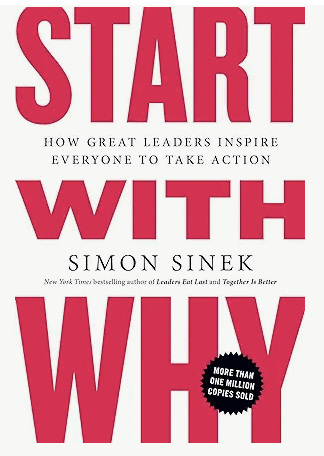
There is very good reason why Simon’s original “Start with Why” Ted Talk has been viewed millions of times. He effectively he cuts through all the talk of tactics to get to the core purpose of why a business exists. 

However, I highly recommend owning this book to get the most benefit. 

Because knowing the WHY of running your business is transformational. Not just for you as an entrepreneur. But also for your staff and customers.

And also, being connected to the PURPOSE of your business creates opportunities for more PROFITS.

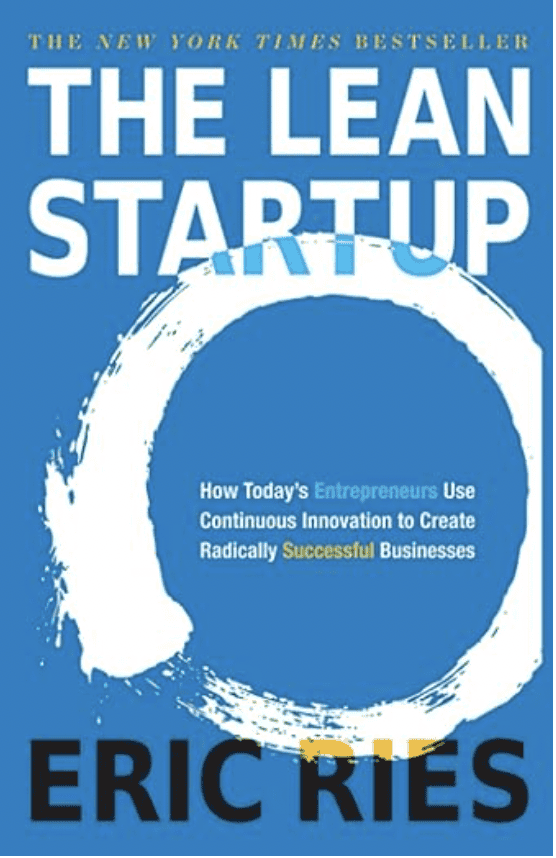
Get your copy of The Lean Startup to have a blueprint handy for the innovative Build-Measure-Learn feedback loop.

Yes, all business has risk. Especially start ups – studies show that 90% of startups fail. 

So this book outlines a scientific approach to measuring and monitoring performance to guide business decisions. 

For entrepreneurs stuck in analysis paralysis, this book will help you get going and get launched. It’s a useful framework to get your ideas out there so you can improve and develop using real data from the marketplace and your target customers.

This list of best books for a startup business wouldn’t be complete without one about consumer trust and customer experience (CX).

I must admit my bias here. Since I spent 20 years running a B2C service business, I have a deep appreciation for value of CX in building revenue and profits.

In fact my passion for CX led me to do my MBA dissertation on how Airbnb retains customer trust online.

The book Extreme Trust explains dull academic concepts in a highly engaging way. By  using real-life examples, every entrepreneur can learn lessons to apply to their own business.

So if you are working on pricing policies, terms of service (TOS), and marketing copy, this book will help you see how that all connects to building strong CX – which translates to healthy profits. 

This list of best books for a start up business wouldn’t be complete without one about consumer trust and customer experience (CX).

I must admit my bias here. Since I spent 20 years running a B2C service business, I have a deep appreciation for value of CX in building revenue and profits.

In fact my passion for CX led me to do my MBA dissertation on how Airbnb retains customer trust online.

The book Extreme Trust explains dull academic concepts in a highly engaging way. By  using real-life examples, every entrepreneur can learn lessons to apply to their own business.

So if you are working on pricing policies, terms of service (TOS), and marketing copy, this book will help you see how that all connects to building strong CX – which translates to healthy profits. 

This book is a love child of my passions – marketing and customer experience.

After all, marketing is more than content strategy and taglines.

This book simplifies the process of how to communicate your brand to customers.

The author is an award-winning storyteller and has many inside baseball stories to share about top brands. She includes interviews and case studies which will inspire you and deepen your understanding of how customer experience and storytelling connect.

Expect to see how  marketing is really about creating an emotional connection with your target audience. So this book is a must-read for any start up business.  

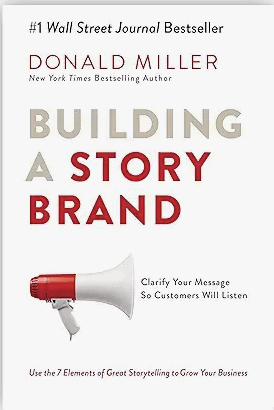
Yes this is another marketing book. But a list of the best books for a startup business wouldn’t be complete with out it. Because Building a Story Brand has quickly become a classic. And it worth having your own copy to guide you through the process of building the brand story for your start up business.

As author Donald Miller explains, “your customer should be the hero of the story, not your brand.”

And this is the real power of this book. It gives entrepreneurs a framework to communicate what your company does in a way that is meaningful and engaging for your target customers. 

Yes this is another marketing book. But a list of the best books for a startup business wouldn’t be complete without it. Because Building a Story Brand this has quickly become a classic. And it worth having your own copy to guide you through the process of building the brand story for your start up business.

As author Donald Miller explains, “your customer should be the hero of the story, not your brand.”

And this is the real power of this book. It gives entrepreneurs a framework to communicate what your company does in a way that is meaningful and engaging for your target customers. 

Best books for a start up business Read More »

Scroll to Top

Subscribe to
The Hagstone Blog

Insider stuff for entrepreneurs like you